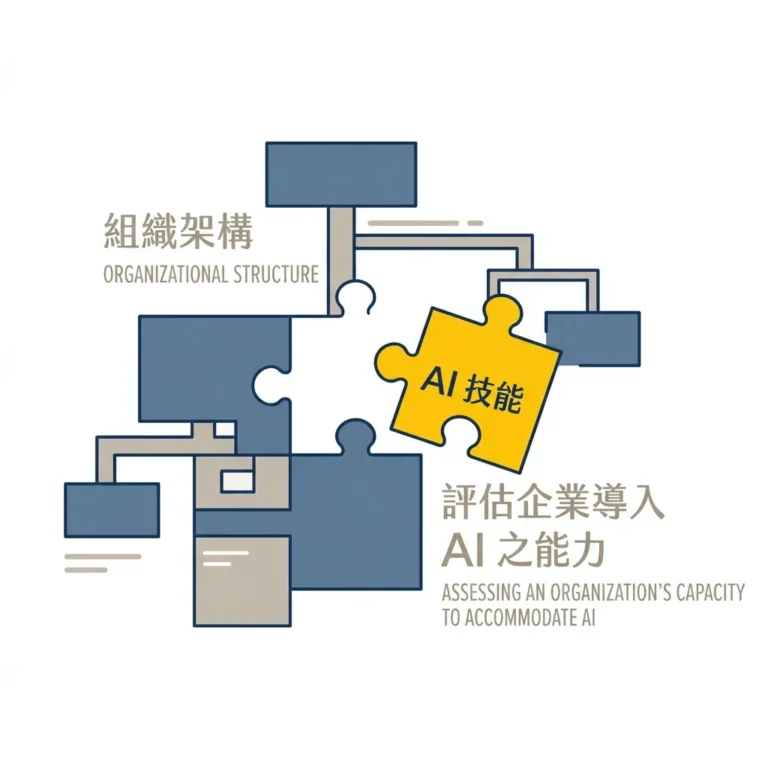
AI is changing HR first through writing and data processing, but the deeper shift is in HR’s role inside the organization. As routine work becomes automated, HR’s focus moves from completing administrative processes to helping the organization adapt. The next job for HR is to connect business needs, workforce conditions, compliance boundaries, and workflows.
AI Changes the Surface of HR Work First
Over the past few years, most HR applications of AI have concentrated on front-line operational work.
Common uses include drafting job descriptions, outlining training programs, generating interview questions, summarizing employee survey feedback, and answering internal policy questions. These applications are intuitive because HR work already involves a great deal of writing, document organization, information classification, and interpretation. The benefits are also easy to see: drafts take less time, data is organized faster, and the cost of routine document work falls.
These changes still sit at the surface. Once AI can handle routine outputs efficiently, what value remains for HR?
HR has often tied value to completing a process: closing a recruitment case, launching training on schedule, collecting every performance review form, or announcing a new policy. This work matters. Organizations need order, compliance, and reliable administrative closure.
The threshold for automation becomes low when a task can be described clearly, broken into fixed rules, checked against data, or generated from templates. Completing the process alone no longer demonstrates the full value of HR expertise. HR must direct more attention to how the organization actually operates.
HR’s Focus Shifts from Managing People to Designing Organizational Capability
Traditional HR work centers on people policies and management processes, including recruitment, learning and development, performance management, payroll, and employee relations. This division of work has operated for a long time because large organizations need stability and auditable processes.
AI will not make that structure disappear overnight, but it will break apart and recombine the way the work is done. Organizations now need to read external changes faster, redeploy talent more flexibly, and help employees adjust to new workflows. This is where HR begins to work on organizational capability design.
The phrase may sound abstract, but the practical questions are specific. What capabilities does the company currently lack? Which roles are being reorganized? Can the organization design a way of working that employees will use, managers will support, and company policy will allow?
A training plan or a new system cannot answer these questions on its own. HR needs to understand business logic, workflow details, human behavior, and compliance boundaries. AI reduces part of the routine operating burden while increasing the level of judgment HR must carry.
AI Automates Tasks, Not Entire Roles
The most common question about the future of AI and HR is: “Which jobs will be replaced?”
That question compresses too much. A job may appear to be one role, but it is actually a chain of different tasks. Recruitment includes clarifying business needs, presenting the role, screening applications, coordinating across teams, calibrating interviews, negotiating compensation, and shaping the onboarding experience. Learning and development work includes capability assessment, instructional design, external facilitator evaluation, and outcome tracking.
AI usually changes a specific task inside a role. Initial resume screening, interview-question ideation, training-material drafts, and survey summaries can all be accelerated with tools.
Practical judgment remains. HR still has to assess whether a business request is reasonable, whether risks have been identified, why employees are resisting, what managers are worried about, and how to write a policy that will survive real exceptions.
A useful starting point is to break work into tasks:
- Rules-and-data tasks: Work with explicit conditions and fixed logic is suitable for automation or system processing.
- Language-and-content tasks: Summarizing, rewriting, classifying, and drafting are suitable for AI-assisted production.
- Context-and-judgment tasks: Work involving trust, competing interests, and compliance boundaries can use AI for options, while decision authority remains with people.
- Architecture-and-design tasks: Reframing problems, adjusting cross-functional workflows, building internal agreement, and designing incentives will become a larger area for HR contribution.
These four categories are a discussion tool, not fixed labels. A single task may span several categories, and its classification can move as the organization matures. The framework is useful only when the work can already be described clearly. If the organization cannot explain the task itself, the categorization has no reliable basis.
HR does not need to become a technical specialist. It does need the ability to deconstruct workflows and recognize which parts can be automated, which should be assisted by tools, and which require human accountability.

HR Becomes the Organizational Translator for AI Adoption
Companies often begin an AI transformation with technology: which model to use, which system to buy, how permissions should work, and how security and personal data should be governed. These boundaries are especially important in financial services and other highly regulated industries.
The value of the tool still depends on whether people are willing to change how they work.
Each group has a different concern. Front-line employees worry about replacement, while managers fear losing control. IT teams focus on maintenance and security; compliance teams focus on accountability. Business units worry that a new system will slow delivery, and senior leaders wait for measurable results. Each concern has a practical basis. Telling people to “embrace change” resolves none of them.
This is where HR can contribute.
HR understands more than policy. It also understands psychological safety, communication, trust, and power inside the organization. AI adoption changes role definitions, accountability, performance management, and change management. If HR contributes only a few AI training sessions, its influence remains too small.
Experienced HR teams can help with the harder conversations: which roles need to change, which processes require a human review floor, and how performance measures should change when efficiency rises. Managers also need help understanding how to lead in a human-AI work environment.
HR can become an organizational translator. It can turn technical language into working methods that business teams understand, and translate front-line resistance into risk signals that management can address early.
The HR Capability Stack Will Become More Layered
As tools become common, capability differences inside HR will become more visible.
HR expertise has traditionally been associated with policy knowledge, project execution, and coordination experience. A new dividing line is emerging: whether someone can connect new tools to existing workflows.
In practice, HR capability will gradually separate into several levels.
At the foundation is the tool user, who can use AI to draft content, organize data, and produce working documents. This will become a common workplace skill.
The next level is the workflow redesign practitioner. This person knows when to use automated forms, permission settings, or a different process sequence, turning fragmented manual work into a more systematic workflow.
The organizational designer evaluates how technology changes role definitions, talent deployment, learning paths, and management accountability, then adjusts how the team works.
The governance coordinator works with IT, security, compliance, and executive leadership to define AI usage boundaries and compliance mechanisms while managing both efficiency and risk.
These capabilities do not need to sit in one person, but a mature HR team needs people who can carry each responsibility. HR professionals who can design working mechanisms will become more valuable. Administrative work limited to running courses, distributing forms, or repeating policy will face greater pressure from tools.
The four levels are useful for locating current capability and planning development. They assume the organization has room to adjust responsibilities. When roles are structurally locked and cannot be redefined, higher-level capability has little room to operate.

HR Should Be Careful: AI Also Amplifies Institutional Problems
AI adoption can create the impression that better tools will automatically improve the organization.
The opposite often happens. New technology amplifies existing management weaknesses. Poor source data produces convincing but incorrect conclusions faster. A disorganized workflow spreads disorder more quickly when it is automated. When managers cannot define a request clearly, the tool generates polished reports that do not solve the problem. A performance system focused only on output volume encourages more formalism. In a low-trust environment, employees may interpret the new system as surveillance.
When adopting AI, HR also needs to ask: “Are our existing policies ready to absorb this level of efficiency?”
AI can help HR identify problems faster, but it cannot carry management accountability for the organization. Policies must define how work moves, who reviews it, how personal data is used, how exceptions can be appealed, and how managers evaluate AI-generated output. Rigor remains necessary in highly regulated environments. Speed does not become organizational capability when the work cannot be traced, audited, or controlled.
HR’s Scarcity Will Show Up Beyond Standard Answers
Tools increase speed. HR differentiates itself in situations where the tool cannot provide a standard answer.
Judgment determines which options can enter the workplace. AI can produce many possibilities, but HR professionals who understand the workflow can see which option crosses a compliance boundary or shifts additional risk onto managers and employees. This judgment grows from sustained observation of people and processes.
Judgment then has to become design. HR needs to break down tasks, connect workflows, assign accountability, and leave a workable route for exceptions. The ability to place a tool in the right part of the process says more than frequency of use.
Whether that design is accepted depends on the trust HR has already built. Employees watch whether policies are fair. Managers want their business constraints to be understood, while senior leaders want risk to remain controlled. People are more willing to change established routines when they believe the new workflow will make collaboration smoother and accountability clearer.
Trust is visible in everyday language. A practical approach is to begin with the strengths people already have. Employees may already possess deep business and customer knowledge; a tool can help turn that experience into a more consistent and repeatable method. Language that pressures everyone to “keep up with the times” adds anxiety. Resistance falls when people feel their expertise is respected.
HR’s Next Step Is an AI Task Redesign Map
HR does not need to begin by buying a system or scheduling a large set of AI courses.
A more practical starting point is an AI Task Redesign Map.
The map breaks important work into specific tasks instead of relying on job titles. Teams can assess each task through several questions:
- How repetitive is the task, and how explicit are its rules?
- Does it involve substantial writing, summarization, or information retrieval?
- Does it involve compensation, performance, discipline, personal data, or another sensitive judgment?
- Do IT, compliance, and business teams need to define a boundary and a review owner together?
- If efficiency rises, what higher-value work will the affected capacity move toward?
With these questions answered, HR can decide which tasks are suitable for automation, which benefit from AI assistance, which need added controls, and which workflows should be redesigned from the ground up.
Calls to embrace new technology often remain at the level of atmosphere. A task redesign map brings the discussion down to specific work. The purpose of adopting a tool is to use the opportunity to redefine how work should be completed. Software proficiency is only one by-product of that process.

Conclusion: HR Becomes a Designer of Organizational Evolution
The future of HR extends beyond administrative efficiency.
AI can handle more writing and data processing, but it also raises a more basic question: as automation takes over more routine work, what distinct value can HR create for the company?
The answer returns to organizational capability.
Organizations will continue to need people who understand how the business is changing, why employees feel anxious, why managers become defensive, and how to find a workable solution within compliance boundaries. HR is well positioned to do this work.
To have that influence, HR must move from policy execution toward designing workflows and organizational capability. In a workplace full of tools, HR creates value by helping the organization make work clearer, more orderly, and more attentive to people.
Further Reading
- The First Step in AI Adoption: Breaking Tasks into Four Layers
- The Next Step for HR AI: Moving Beyond Tool Showcase to Workflow Refactoring
- The Motor and the Old Belt: The Cognitive Trap in Enterprise AI Transformation and the 50-30-20 Model
References
- Generative AI and Jobs: A Refined Global Index of Occupational Exposure (ILO, 2025)
- Artificial Intelligence and the Changing Demand for Skills in the Labour Market (OECD, 2024)
- Artificial Intelligence Risk Management Framework 1.0 (NIST, 2023)
- Futureproofing Your Skills: AI Is Changing How HR Skills Are Applied (CIPD, 2026)
Frequently Asked Questions
Will AI directly replace HR jobs?
Jobs are made up of different tasks. AI usually changes the rule-based, repetitive, and language-heavy parts first. Work involving trust, compliance, exceptions, and cross-functional design still needs human decision-making and coordination. The impact varies with the role and the organization's maturity.
Why does HR need to work on organizational capability design as AI becomes common?
AI redistributes tasks inside roles and changes workflows, accountability, performance measures, and learning needs. HR must connect business demand, talent deployment, employee readiness, and compliance boundaries so the new way of working can continue.
What should an AI Task Redesign Map assess?
It should assess task repetition and rule clarity, language and data-processing needs, sensitive-data risk, cross-functional review responsibility, and where capacity should move after efficiency rises. These questions guide the choice among automation, AI assistance, human review, and full workflow redesign.
What role can HR play in AI governance?
HR can clarify human-AI responsibilities, define human review floors, assess the impact on roles and performance, and translate front-line concerns into risk signals for IT, compliance, and management. Technical and security decisions remain shared responsibilities with the relevant specialists.